





Tassle Fern
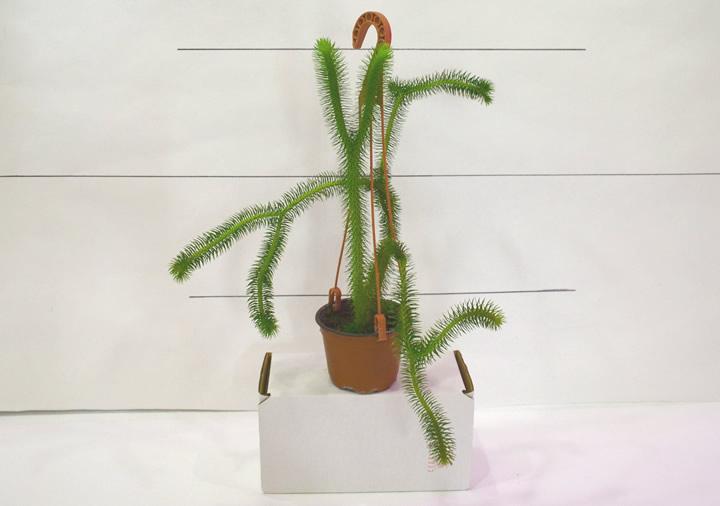
Huperzia squarrosa
Other common names for this plant include firmoss or fir clubmoss. Not a true fern or a moss, this plant represents an intermediate stage in evolution from mosses to ferns. Rather than seeds, it reproduces via spores, just as ferns and mosses do.
Scientific classification: |
|
| Kingdom: | Plantae |
| Division: | Lycopodiophyta |
| Class: | Lycopodiopsida |
| Order: | Lycopodiales |
| Family: | Huperziaceae |
| Genus: | Huperzia |
| Species: | squarrosa |
Natural habitat and growing conditions:
This plant is an ultra-tropical epiphyte (living on tree branches, though not as a parasite) native to tropical rain forests in Southeast Asia. It requires constant warmth, high humidity, bright light and a well-drained moist substrate to perform well.

Notes of interest:
- The spores were used as flash powder for theater effects and cameras in the 19th century, as they burn quickly and brightly but with little heat.
- The plant is structurally similar to the earliest vascular land plants; In the Carboniferous (359-299 million years ago) giant tree-like forms of Lycopodiophyta (the same division of plants as Huperzia, closely related) dominated the landscape; their remains form most of the coal we mine today.